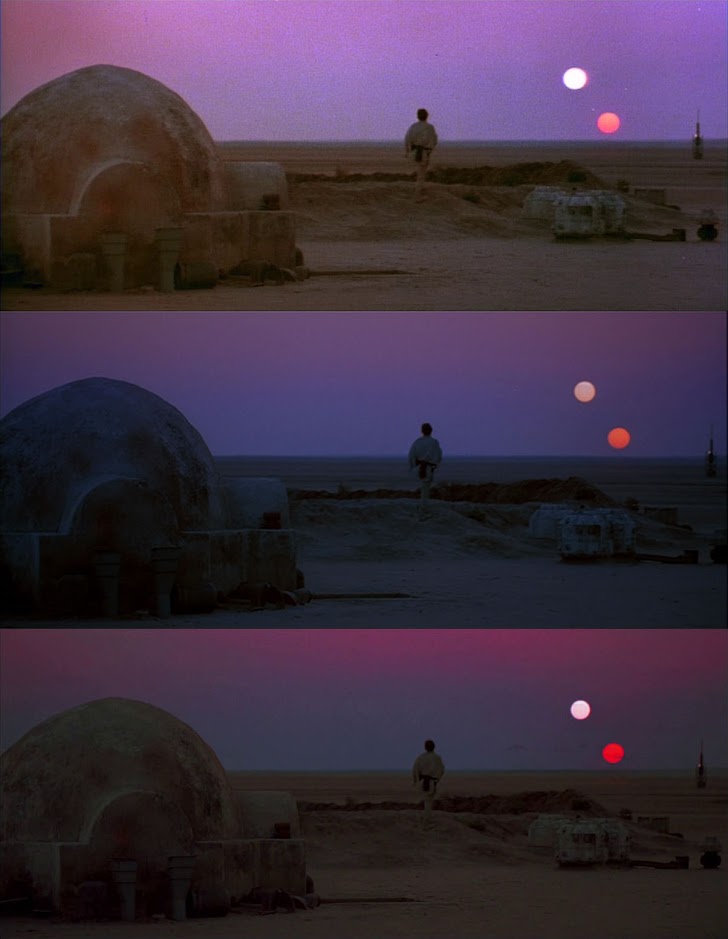
Showing posts with label Star Wars: Uncut. Show all posts

Thursday, February 6, 2020

Star Wars Uncut

In the 'Once Upon A Galaxy: A Journal of The Making of The Empire Strikes Back’ book, published in 1980, by Alan Arnold (page 177) - George Lucas states…
https://originaltrilogy.com/topic/George-Lucas-Unreliable-Narrator-and-Time-Travelling-Revisionist-/id/66986
Star Wars: A Nice Look into the Future

https://photos.google.com/share/AF1QipMh7UH0DbCPGxQyEOdmfmYiFnh3lgoBNNLCPnHTQnvyCtXQnScSo8L_vR3x6A9y_Q?key=aDFfLXE3clp4SldVcndkalc3UjJ4UlU2ZUlDb0JB

Tuesday, February 4, 2020

Understanding Uncut?

As I said last week watching Star Wars is painful for me, I do not particularly enjoy it and would rather not have to watch it. When explaining that we had to watch Star Wars: Uncut, Dr MB made it seem like it would be even worse than watching the original movie. I was pleasantly surprised when that was not the case for me. I actually enjoyed watching the uncut version. Unfortunately though I found myself insanely confused and mainly just watching it for the entertainment of the vastly different scenes every 15 seconds. 
My question is: did anyone else find this to be the case? If it is difficult to understand/follow the story for most, then can we consider it simply a silly remake for laughs and not consider it plagiarism?

Who Should Own Creative Content?

Something that the combination of this BAD uncut film and the Vox article "This is the best version of Star Wars--and watching it is a crime" got me thinking, is who has a right to create something, contribute to it, and benefit from it? My first reaction to watching Star Wars uncut was that it was horrible, and there is such a thing as giving fans too much power in fandoms. In the past, some films or television shows have listened too heavily to fan theories and input, and have sacrificed the integrity of said media entirely. But on the opposite end, some creators have completely gone overboard and ruined their own creative work in certain ways--for example, George Lucas in the case of adding in terrible CGI to the original Star Wars and other terrible additions he made, and JK Rowling tweeting unnecessary additions to the Harry Potter world that none of us asked for (also for her blatant transphobic tweets...but that's another issue entirely). I'm all for world-building, but these extraneous circumstances are completely unnecessary! My first reaction is that someone should limit Lucas' control over the original films and I'm glad Rowling has no power over any of the HP films, but then as a writer...I would want all creative control and ownership over my work that I created! The Vox article accurately talked about how out of control copyright laws are, so my question is...

Should copyright control be limited to the creators of said creative work? If so, what does that look like?


Creatively Frustrating Fandom

"One-thousand one, one-thousand two, one-thousand three"; "Why am I watching this?"; "Was that a beer bottle?" These were just some of my thoughts while watch Star Wars: A New Hope Uncut. The crowd sourced film is equal measures entertaining, creative, and entirely frustrating to view.

The positives of this work truly stem from the creativity and loyalty of Star Wars fans. Some takes were smart, homemade versions of the original scenes (i.e. "Obi One" and "Darth Vader" playing chess on the beach for their epic battle), others displayed true talent on the part of the creator (any of the CGI, computer generated scenes). The Uncut version depicts the loyalty of fans and their attention to details.

The difficulty of the film comes from the hyperactive switching between cuts to generate the entire film. Watching the original Star Wars allowed me time to think and process what was happening: the Uncut version forced me to focus on everything that was taking place in order to orient myself to what exactly was happening. Around the forty-five minute mark I worried I wouldn't be able to finish. At the hour-and-half timestamp I was sure my brain was fried. By the time the film concluded I simply went to bed out of exhaustion.

My most conclusive thought to come out of this film is Luke's reactive to Obi One's death. Last week we noted that he moves on rather quickly from his aunt and uncles deaths, a note we chalked up to a plot device to skip forward to more interesting story-lines. Obi One's death has a more profound influence in comparison, though. For whatever reason the Uncut version drew my attention to this detail as Luke, Leia, R2D2 and C3PO sat around the booth in the Millennial Falcon.

Image result for star wars uncut" 
Imaged sourced from theverge.com. Scene originally from Star Wars: A New Hope Uncut. https://www.theverge.com/2012/1/21/2721993/star-wars-uncut-directors-cut 

Is the Original Always Better?

While watching Star Wars: A New Hope Uncut, I started to think about "originals" and why there's typically a stigma that comes along with sequels, remixes, or revisions. Why is that, exactly? Who's to say that content that is derived from something else is "bad"? While I do have to say that I believe Uncut to be worse than the original (sorry Dr. MB), I think there are some really creative and interesting takes on the original scenes. That doesn't mean that the film was "bad" per se, but it was just different. Honestly, I believe that's what people struggle with the most.

With films and franchises like Star Wars that have such a strong fan base, there are certainly people out there that want their movies to remain intact. They feel uncomfortable with anything that is different than what they know and love, so they automatically shut their minds to the idea that what is produced could potentially be interesting, and maybe even better. People really don't like change; it makes them uncomfortable and upset. Perhaps that's why we struggle with sequels and remixes so much - we liked the original the way it was, and nothing could be better. Maybe we're just afraid that the new content could potentially make us think about the original in a different way, which would be even more devastating to us.

There are, however, remixes and sequels that are MUCH better than the originals - Jaws the movie was way better than Jaws the novel. The Dark Knight was way better than Batman Begins. The Scarlet Letter (the movie) was definitely NOT better than the book. We still love Demi Moore, though.

But given all of the above, my question still stands: is the original really always better, or are we just uncomfortable with things that are different?
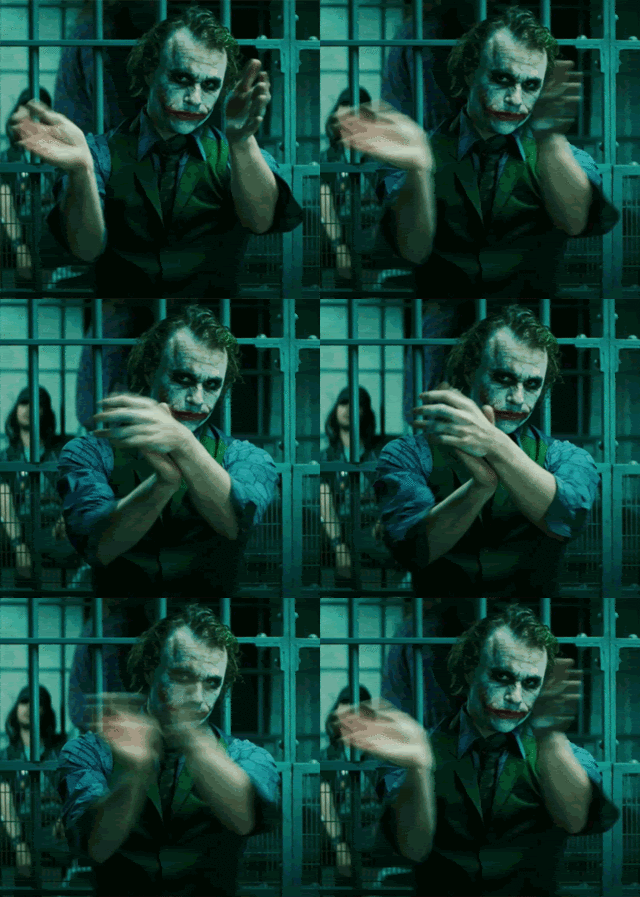
Heath Ledger's Joker from giphy.com

I'll never be your beast of burden.


Star Wars: A New Hope Uncut obviously raises interesting questions about ownership, fandom, and our desire to be a part of something bigger than ourselves. But it also raises questions about what we’re “allowed” to reimagine or revise and why. The leviathan that is Star Wars seems to remain unscathed by hundreds or thousands of people reimagining all or part of it, in the way that The Rolling Stones is unaffected by my walking down the street and whistling “Beast of Burden.” Perhaps the size (in terms of access and popularity) has a direct impact on what we’re allowed to revise or reimagine. I’m thinking of a parallel to dominant and marginalized groups and the privileges afforded to each. It’s more culturally acceptable for a marginalized group to assimilate into a dominant culture than it is for a member of a dominant group to embody cultural aspects of a marginalized group (i.e. cultural appropriation). In that way, fans reimagining Star Wars are assimilating into part of a dominant culture, so that seems much more acceptable than, say, George Lucas trolling fan pages and taking ideas from ordinary fans without crediting them (which reads as exploitative and underhanded).


My son, Henry, participating in fandom at a young age.
I made this costume without permission from Lucasfilm.

Fan Work, bootlegs, and Ownership

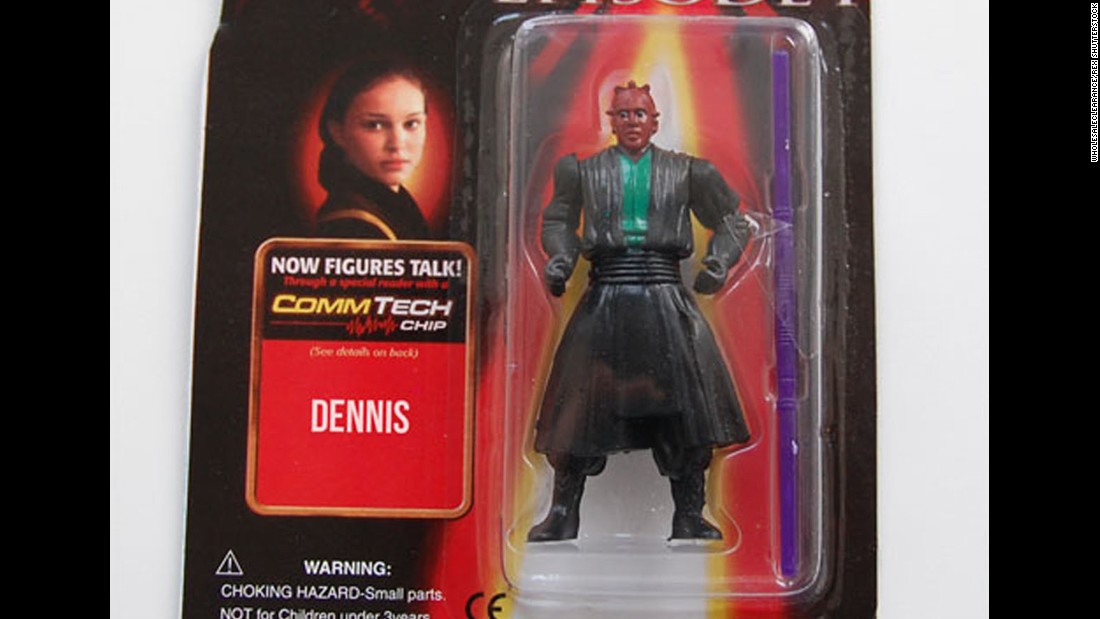
Image result for star wars bootleg"
Ah yes, all Jedi tremble at the name of Sith Lord...Dennis?
What is the difference between a fan project like  Star Wars: Uncut and a bootleg, like the action figure above?
Would the backlash against George Lucas over his edits be so strong if he didn't refuse to make the original cuts avalable?

Monday, February 3, 2020

Copyright is kind of terrifying


“The ridiculous thing about the situation isn't that Lucas doesn't want to make the cut of the film that I want to watch. It's that it was illegal for Harmy to make it. And it was illegal for me to download it. And it would be illegal for me to make it available for download from Vox.com or even to put a link on this page that would let you go get it. It's illegal because of how Congress has over the years extended and expanded the scope of copyright law in ways that have become perverse and destructive to human culture.


This quote from the Vox article brought me back to the final chapter of the film “Everything is a Remix” and reminded me of a question Dr. MB posed to the class at the end of that day; why do we reward originality? what is so special about originality? Of course, originality exhibits creativity, which is a favorable characteristic, but some things that aren’t considered ‘original’ also display aspects of originality, aka the crowdsourced Star Wars. Because of our copyright laws, we could be stripped of this creativity in any moment, and that is very scary to me.

George Lucas: Perfectionist

This quote strikes me as very odd, especially the part where Lucas says "I'm the one who has to have everybody throw rocks at me...for something I love rather than something I think is not very good, or at least something I think is not finished." I understand his dislike for an original work, usually when an artist, in my case writer/poet, views their first work as unfinished or the worst copy. He takes responsibility but the two versions can and should coexist because we can compare the old and newer versions, the progress in technology, and in the end it is art. Art improves and continues to grow but to get rid of the original does not fully mean you accept responsibility of how awful it is and how everyone loved it but that you are erasing an original piece of art that was very fine on it's own. Lucas is clearly a professional and before he had edited Star Wars he must have had some pride in the first version. To erase something so impactful and replace with not just some upgrading in shading and tech but to add and replace specific things to fit your own vision is a bit selfish.

Preserving the cultural past

In the introduction to the "George Lucas: Unreliable Narrator & Time Traveling Revisionist," oojason writes, "Many of the new generation(s) of fans are seemingly oblivious that the original theatrical versions actually exist - and also seemingly quite unaware and uninformed about Lucas’ alterations to the history of Star Wars. Therefore, they are generally accepting of George’s revised statements; taking them as true and accurate accounts - when in reality… many are anything but."

This stood out to me because, as student of history, I concern myself with the preservation of memory when it comes to the historical past. But is it just as important to preserve the cultural past? Why is it such a bad thing if new fans don't know the "original" Star Wars?

Monday, January 27, 2020

What's the big "secret"?

Question:  Thinking about this quote: ". . . myth the secret opening through which the inexhaustible energies of the cosmos pour into human cultural manifestations."  What's so secret about it?  Who's withholding information from whom?