Showing posts with label Dorsey Armstrong. Show all posts

Tuesday, February 18, 2020

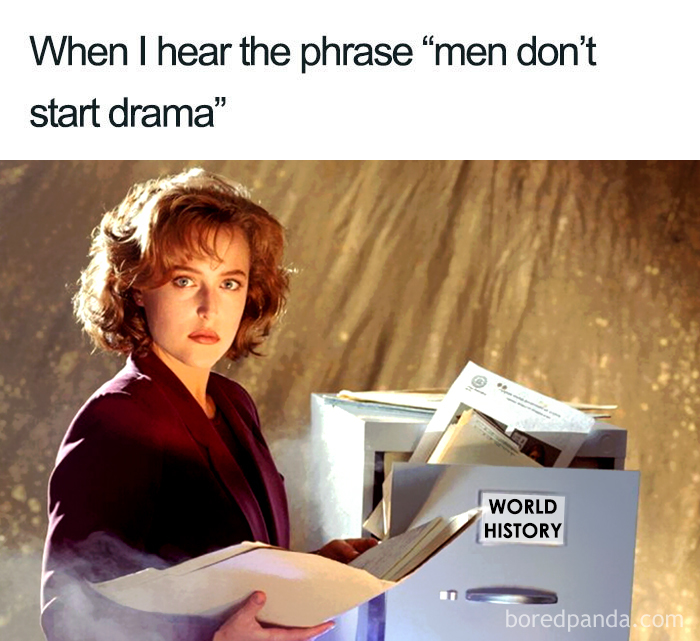
the memes are the best part of this post (couldn't think of a title)

I have two quotes Id like to point out, one from the beginning of “General and the Script/Print Continuum: Caxton’s More Darthur” and one from the very end. 

“Who made the changes that cause Caxton’s Morte to diverge from the Winchester manuscript is less important than the fact that the changes are made.” Page 134, Dorsey Armstrong
This got me thinking about the idea of plagiarism and original work that we had touched on earlier in this semester. Armstrong states that the person who made the changes does not matter nearly as much as the changes themselves. This is an interesting take on the idea that it is not important how or where we get the information, but rather that we get it at all. 


Later in the reading it says:
“At the same time, one could also read these changes as being made with the understanding that a large portion of his audience might consist of women: he deletes material offensive to them, such as the rape clause, and also seeks to limit suggestion of their power and influence, echoing the model of feminine virtue…” 145, Dorsey Armstrong 
This stood out to me as well as an interesting explanation behind the decisions to change things. 


Assigning Value in Le Morte d'Arthur


In the third excerpt of Le Morte d’Arthur, I noticed a difference between what the Knights of the Round Table valued and what we may value today.  King Arthur and company tend to focus on the big picture while I’m stuck losing the forest for the trees.  Most of the characters involved easily overlook Lancelot and Gwynevere’s transgressions, only to focus their attention on maintaining their group dynamic.  Arthur even goes on to say, “I regret less the loss of my queen … than of our fellowship, which was surely without equal in all Christendom” (502). From a modern perspective, this points to a lack of humanity on the part of all those involved, but perhaps Malory’s contemporary readers were more interested the ideas that Arthur’s Round Table represented than any person-to-person dealings within the story.  This is echoed in the Armstrong article, which includes the argument that women in literature can gain power by being portrayed as helpless victims.  Gwynevere, in this excerpt, is constantly at risk of execution and hardly gets any dialogue, but ultimately, through almost every other character’s indifference, sets into motion the downfall of Arthur’s boys club.

Beyond the Script: Gender and Media

Dorsey Armstrong's "Gender and the Script/Print Continuum: Caxton's Morte Darthur" made me think a lot about content in terms of accessibility, and how things are written for certain audiences, and why. The printing press obviously offered much more accessibility and readership amongst a larger audience, and it was interesting for Armstrong to point out the differences between Malory and Caxton's versions of Morte Darthur. Accessibility began to go beyond the typical structures of class levels, into a concentration of gender, as shown by multiple examples in this essay. But something that stood out to me was in these examples, the emphasis on the feminine, the damsel in distress, and the stereotypical focus on what interests female readers might have (for example, only having an interest in romance stories). Which caused me to wonder:

Did Caxton's depiction of feminine interests and/or stories form the stereotypes for media framed for women for the following few hundred years? Have these binary and focused stereotypes really existed since the invention of the printing press?


Monday, February 17, 2020

So put me down, punk


Difranco, Ani. "Not A Pretty Girl Live in Cleveland OH," YouTube, uploaded by Righteous Babe Records, 

I'm fascinated by the conversation about gender and power in both Armstrong's article and Le Morte D'arthur. Armstrong contends that by "constructing the feminine as always helpless, needy, and vulnerable, the oath ironically renders women powerful, in that knights are compelled to obey when a lady requests assistance" (141). In this framing, the damsel in distress has power over the knight by virtue of his oath to protect her, an argument that seems akin to ideas about how women, in their sexual objectification by men, hold a kind of sexual power over them. In the sense that the feminine provides the "marginal, yet critical" (142) counterpoint to the "dominant, active, masculine knightly agent" (141), the argument holds in a sort of Taoist, abstract way. But it's also (obviously) deeply problematic to assign "power" to a group that is systemically oppressed and powerless because the group that put them in that position decides to take an oath to protect them. (Note, also, the irony that the knights are usually saving the women from...you guessed it...other knights.) I mean, would we say that babies have power over their parents by virtue of their parents deciding to feed them? Where would they be if we didn't?